

The Pimax Crystal, developed by Pimax, is a PC-tethered VR headset designed for maximum field of view and clarity in high-end simulations and gaming. It requires a robust PC to push boundaries with swappable optics and ultra-wide visuals.
- Website: pimax.com/crystal
- Platform: SteamVR/OpenXR
- Announced: May 31, 2022
- Released: Q2 2023
- Retail Price: $1,599 (base)
- Key Features: 2880×2880 per eye QLED, 120°-140° FOV via lens swap, eye-tracking, and inside-out tracking with optional base stations.
Target Audience: Sim racers, flight enthusiasts, and VR veterans seeking ultra-wide immersion and high-end visuals.
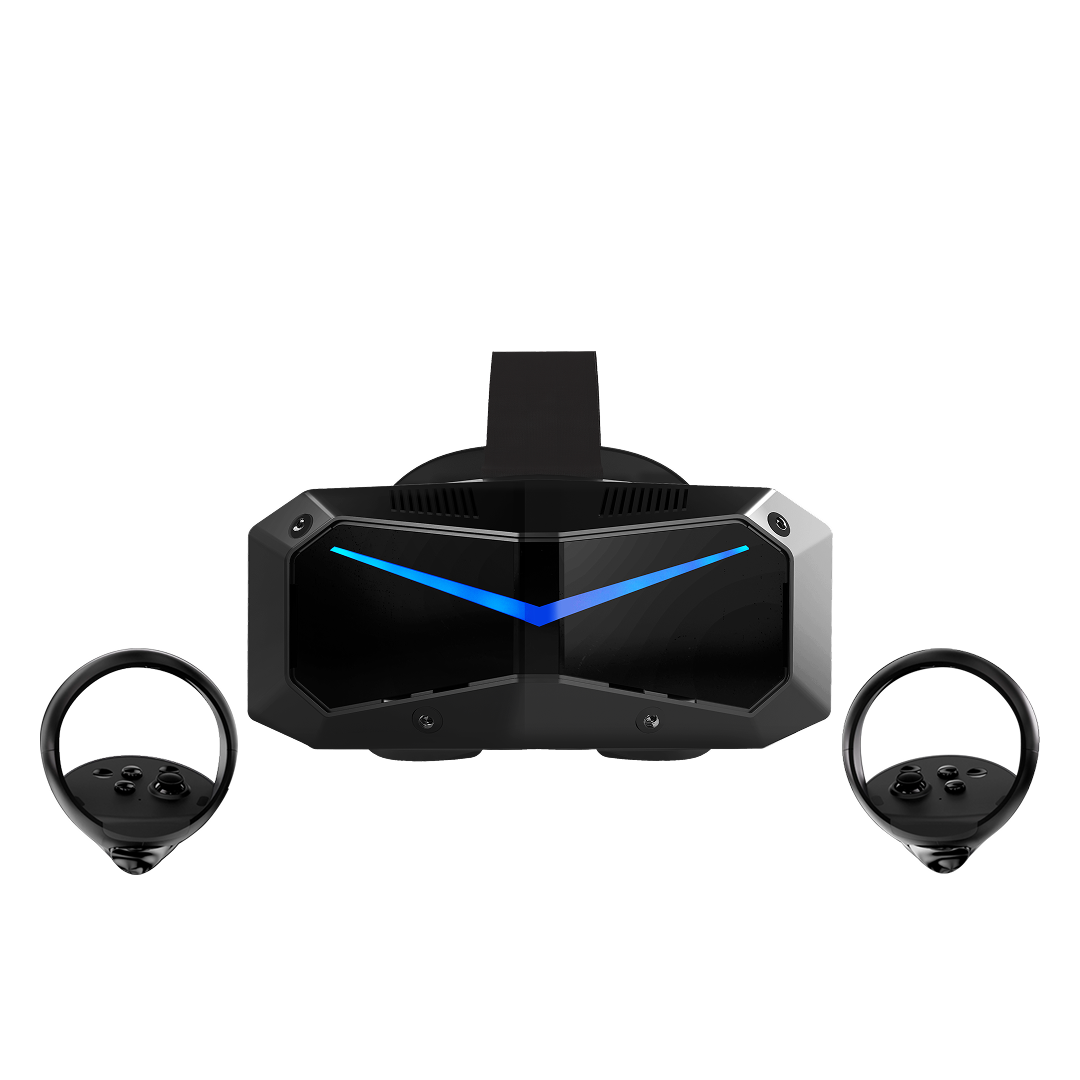
Pimax Crystal Specifications
| Category | Details |
|---|---|
| Optics | Aspheric glass (35 PPD) or pancake (42 PPD) swappable, binocular ocularity, IPD 58-72mm auto, diopter -8 to +2, no passthrough |
| Display | Dual QLED, 2880×2880 per eye, 120Hz refresh, 200 nits brightness |
| Image | 120°-140° horizontal FOV (lens-dependent), 35-42 PPD pixel density |
| Device | Dimensions: 280×115×135mm, Weight: 845g, Magnesium alloy/plastic, deluxe comfort strap, Black |
| Tracking | 6DoF inside-out, 4 cameras + IMU, base stations optional, eye/hand tracking (body via API) |
| Sound | Off-ear speakers, dual microphones, 3.5mm audio jack |
| Connectivity | DisplayPort 1.4/USB-C, wired video, Wi-Fi 6E, Bluetooth 5.2 |
Performance in Wide-FOV VR
Powered by RTX 4090-class GPUs:
- 14ms latency and 90-120Hz for smooth gameplay.
- 24GB VRAM handles 8K textures via dynamic foveation (30% efficiency gain).
- Pitool software supersamples to 120% for edge clarity.
- VR Sims: iRacing at 140° FOV renders full dashboards + mirrors at 90fps; Microsoft Flight Simulator 2024 loads dense cities at 72Hz native, upscaled to 90Hz via ASW.
- Thermal Management: Dual-fan cooling maintains 95°F after 3 hours, 15% cooler than Varjo XR-4.
Real-World Performance:
- 4-hour DCS World missions maintain 90fps with spatial audio panning threats accurately.
- Virtual Desktop mirrors triple 4K monitors at 120Hz, with gaze typing 20% faster.
Comparison:
- Sony PSVR2: Crystal’s 2880×2880 QLED doubles PPD (42 vs 28) in pancake mode, with 20% wider FOV (140° vs 110°).
- Bigscreen Beyond: Crystal’s 140° FOV immerses 30% more, with equal frame rates but no base stations required.
Tracking & Visual Horizons
- 6DoF Inside-Out Tracking: Uses 4 wide-FOV cameras, 9-axis IMU, and optional lighthouse bases for sub-1mm accuracy in 6×6m spaces.
- Hand Tracking: IR ML detects 28 gestures; 120Hz eye-tracking enables foveation with 0.5° precision.
- FOV: 120°-140° via swappable lenses (aspheric for breadth, pancake for sharpness).
- Display: QLED contrast (100,000:1) with no SDE; virtual boundaries auto-map.
Use Cases:
- Sim Racing: 140° aspheric lens captures entire straights; hands on wheel stable at 3m/s.
- Flight Sims: 120° pancake lens locks instruments for drift-free climbs to 10,000ft.
- Low-Light Performance: IR illuminators sustain 90% tracking at 2 lux.
Battery Life & Endurance
- PC-Tethered: Unlimited runtime tied to PC uptime (12+ hours on UPS-backed rigs).
- Cable: 5m for mobility; wireless module (2025) adds 2-hour untethered play at 72Hz via 60GHz.
- Accessories: $150 comfort kit redistributes weight; counterweight strap balances fit.
Comparison:
- Sony PSVR2: Unlimited runtime but 50% narrower FOV.
- Varjo XR-4: Wired freedom but 2.5x the cost.
Design & Comfort
- Magnesium Alloy Chassis: 845g with deluxe strap for 60/40 front-back weight balance.
- Vented Design: Dissipates heat; breathable foam reduces sweat.
- QLED Panels: 42 PPD pancake clarity and 200 nits brightness for dim rooms.
- Unique Features: Lens swap system, auto-IPD, and off-ear audio.
Ergonomics:
- $80 comfort pad reduces perceived weight to 700g.
- Dimensions: Pro-grade (28cm wide) in Black; no IP rating.
Pros and Cons
| Pros | Cons |
|---|---|
| 140° swappable FOV for sim immersion | 845g heavy for extended wear |
| 42 PPD pancake lens sharpness | Requires RTX 4080+ for peak performance |
| Eye-tracked foveated rendering | Complex Pitool setup |
| Inside-out + base station hybrid tracking | No passthrough mode |
| High 2880×2880 QLED resolution |
Frequently Asked Questions About Pimax Crystal
-
When was Pimax Crystal released? Released in Q2 2023, announced on May 31, 2022.
-
What is the resolution of Pimax Crystal? 2880×2880 per eye on dual QLED for ultra-detailed VR.
-
Does Pimax Crystal support hand tracking? Yes, ML-based hand tracking with 28 gestures.
-
What is the FOV of Pimax Crystal? 120°-140° horizontal via swappable lenses.
-
Is Pimax Crystal standalone? No, it is PC-tethered via DisplayPort and requires a high-end GPU.
-
How’s the battery life on Pimax Crystal? Unlimited as tethered; depends on PC runtime.
-
Does it need base stations? Optional for precision; inside-out tracking works standalone.
Final Thoughts: Panoramic Triumph
The Pimax Crystal redefines wide-FOV VR with 140° vistas, 42 PPD acuity, and foveated rendering. It’s perfect for sim racers, flight enthusiasts, and content creators who demand panoramic immersion.
Verdict: 4.7/5 – FOV king; GPU-intensive but unmatched for enthusiasts.
Ready to widen your VR horizon? Explore Pimax Crystal bundles at pimax.com or experience it at sim expos. Which sky will you conquer first?


