
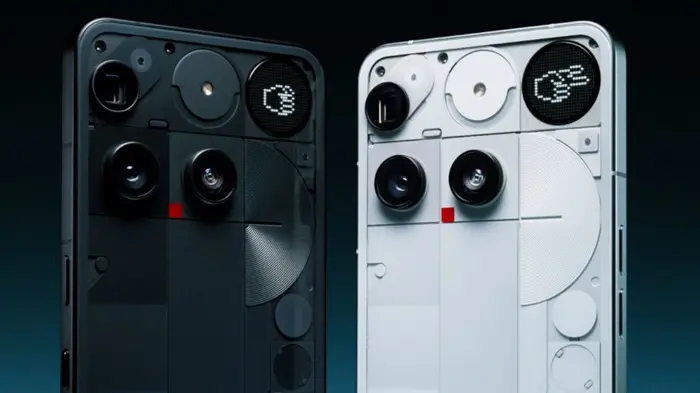
Specifications :
What’s Under the Hood?
| Category | Details |
|---|---|
| Display | 6.7-inch AMOLED, 2800 x 1260 (460 ppi), 120Hz refresh rate, HDR10+, 1600 nits typical/4500 nits peak, Gorilla Glass 7i (front/back) |
| Processor & RAM | Qualcomm Snapdragon 8s Gen 4 (4nm, 8-core CPU, Adreno GPU with AI engine), 12GB/16GB LPDDR5X RAM |
| Storage Options | 256GB, 512GB (UFS 4.0, no microSD expansion) |
| Camera Setup | Triple rear: 50MP main (f/1.6, OIS), 50MP ultrawide (f/2.2, 114° FOV, macro), 50MP 3x telephoto (f/2.6, OIS); 50MP front (f/2.0, autofocus); 8K 30fps, 4K 60fps, TrueLens Engine 4 AI, Dolby Vision |
| Battery | 5,150mAh, 50W wired (80% in 30 mins), 15W wireless, 5W reverse wireless (charger not included) |
| Operating System | Android 15 with Nothing OS 3.5 (5 years OS/7 years security updates) |
| Build & Dimensions | Transparent Gorilla Glass back, matte aluminum frame, IP68; 162.5 x 76.4 x 9mm, 218g |
Performance Analysis
| Category | Details |
|---|---|
| Daily Use & Multitasking | Snapdragon 8s Gen 4 handles multitasking smoothly (12+ apps in background). AnTuTu score: ~1.5 million (25% improvement over Phone 2). AI features: Intuitive for productivity (e.g., Essential Search for natural queries). |
| Gaming | Call of Duty: Mobile: 60fps at high settings, 40°C max temperature. Battery: 5-6 hours of gaming before recharge. |
| Camera Performance | Daylight: Punchy, detailed shots with excellent dynamic range. Low-light: Competent but trails iPhone 16 in skin tone warmth. Telephoto: 3x zoom with natural bokeh; 10x hybrid zoom for travel. Video: 4K 60fps with minor stabilization jitters. |
| Battery Life | Mixed use: 18-20 hours (browsing, YouTube, calls). Heavy use: 12 hours screen-on. Charging: 50W wired (80% in 30 mins); 15W wireless. |
| Software | Nothing OS 3.5: Minimalist, widget-rich, with AI-organized notes. Updates: 5 years OS/7 years security (Android 16 in Q3 2025). |
Pros And Cons
| Pros | Cons |
|---|---|
| Iconic Glyph Matrix for notifications | Non-LTPO display (fixed 60-120Hz) |
| Versatile all-50MP cameras | No charger included |
| Smooth daily performance | Inconsistent low-light video stabilization |
| Vibrant 120Hz AMOLED screen | USB 2.0 speeds (slower file transfers) |
| Long update promise (5 years OS/7 years security) |
Pricing
| Model | Price | Deals |
|---|---|---|
| 12GB/256GB | $799 | $300 off for Phone 1/2 owners (IMEI verification, valid through October) |
| 16GB/512GB | $899 | Amazon bundle: 50W charger + case for $749; Verizon: $200 back over 24 months on Unlimited plans |
User Ratings : What Are Users Saying?
| Category | Rating | Feedback |
|---|---|---|
| Design | 4.7/5 | Glyph Matrix and transparent back praised; off-center cameras criticized. |
| Performance | 4.4/5 | Smooth OS and gaming, but some note warmth during extended use. |
| Camera | 4.2/5 | Strong daylight/portraits; low-light inconsistencies. |
| Battery Life | 4.3/5 | Reliable all-day stamina, improved over predecessors. |
Comparison
| Feature | Nothing Phone 3 | Galaxy S25 | Pixel 9 | iPhone 16 |
|---|---|---|---|---|
| Price | $799 | $799 | $799 | $799 |
| Display | 6.7" 120Hz AMOLED | 6.2" 120Hz LTPO AMOLED | 6.3" 120Hz LTPO AMOLED | 6.1" 60Hz OLED |
| Processor | Snapdragon 8s Gen 4 | Snapdragon 8 Elite | Tensor G4 | A18 Bionic |
| Battery | 5,150mAh | 4,000mAh | 4,500mAh | 3,500mAh |
| Camera | All-50MP, 3x telephoto | 200MP main, 10x zoom | 50MP main, AI magic | 48MP main, cinematic video |
| Software | Nothing OS 3.5 (Android 15) | One UI (Android 15) | Stock Android 15 | iOS 18 |
| Unique Feature | Glyph Matrix | S Pen support | Magic Editor | Seamless Apple ecosystem |
Is the Glyph Matrix More Than a Gimmick?
- Design: The transparent back with Glyph Matrix is visually stunning and functional (notifications, animations).
- Build: IP68-rated, Gorilla Glass 7i (front and back), but no official drop test ratings.
- Display: 6.7" 120Hz AMOLED with 4500 nits peak brightness—brighter than the Pixel 9 (1400 nits).
Final Thought: The Glyph Matrix is a unique selling point, but its practicality depends on user preference.
Frequently Asked Questions (FAQ)
1. Is the Nothing Phone 3 worth buying over the Pixel 9?
✅ Yes, if you:
- Love unique design (Glyph Matrix).
- Want longer battery life.
- Prefer a cleaner OS (Nothing OS vs. Pixel’s bloat).
❌ No, if you:
- Prioritize camera performance (Pixel 9’s AI is superior).
- Need faster wireless charging.
(Source: Android Authority comparison)
2. How does the Nothing Phone 3 compare to the Galaxy S25 for gaming?
The Snapdragon 8s Gen 4 handles Call of Duty: Mobile (60fps) and Genshin Impact (45fps) well, but the Galaxy S25’s Snapdragon 8 Gen 4 is 10-15% faster in benchmarks.
(Source: GameBench gaming test)
3. Does the Nothing Phone 3 support wireless charging?
✅ Yes, but only 15W Qi (slower than Pixel 9’s 20W).
4. Is the Glyph Matrix useful, or just for show?
It’s both:
- Useful: Customizable notifications, timers, and animations.
- Aesthetic: Makes the phone stand out.
(Source: The Verge hands-on)
5. How long will the Nothing Phone 3 receive software updates?
Nothing guarantees 5 years of OS updates and 7 years of security patches.
6. Is the Nothing Phone 3 good for photography?
✅ Yes, for daylight and macro shots. ❌ No, for low-light and zoom (Pixel 9 and Galaxy S25 are better).
(Source: DXOMARK camera review)
Conclusion
The Nothing Phone 3 is a quirky, capable mid-flagship that stands out with its Glyph Matrix, versatile cameras, and long-term software support. While it may not match the raw power of the Galaxy S25 or the AI prowess of the Pixel 9, it offers a refreshing alternative for those who prioritize design and personality without compromising on performance.
Who should buy it?
- Creators who want a unique aesthetic for social media.
- Gamers on a budget seeking smooth gameplay.
- Minimalists who prefer clean, bloat-free software.
Final Verdict: Yes, buy it—if you value style, fun software, and a device that sparks joy in daily use.


